
Pininfarina and their annual reports
Pininwho? This was my initial reaction when I opened the Companies List spreadsheet and seen my name next to Pininfarina. Two columns over it stated that Pininfarina was in the Automotive industry. “How small is this company?” were the exact words I said aloud to myself when I read that they are in the automotive industry. Now I wouldn’t say I’m a car expert, but I will say I have sizable knowledge about the automotive industry as I used to be a salesman and as a hobby, I fix cars.
Not knowing about this company but being in a field I enjoy will be interesting. I thought University assignments would be a standard case that everyone gets and its very black and white however after seeing that we must do our assignment based on a real company, it made me feel a bit better. To top it off, I got given a company which has shaped the development of some classic cars that every man drools over. What more could I ask for? This company fits my interest to a tea so I’m excited to see where it takes me!
Upon doing a simple google search, I found the following facts:
- They are an Italian company
- They were founded in 1930
- They were first listed on the Italian Exchange Market in 1986.
Then, after digging around through report after report, I found my reason as to why the name Pininfarina didn’t hit me in the face, but boy did I feed silly when I realized that Pininfarina are among the greatest in the game.
See, after reading about the company, I concluded that Pininfarina (in my eyes) have been playing the role of a ‘contractor’ in the automotive industry. They have their own business in coachbuilding for some of the greats like Ferrari, Maserati, Volvo, etc however as a side gig, they would take the dreams of customers and create one-offs. In amongst all of this, they also designed and produced a few of their own branded cars with the dream of one day creating a Pininfarina Supercar. For a more detailed background of Pininfarina, visit my blog: https://tysonmacgregoreducation.school.blog/my-company/
With background information in mind, I decided to tackle the annual reports for the company and try to make sense of my very first look at an annual report (find links to any annual report here: https://pininfarina.it/en/investor-relations/annual-financial-reports/).
First thing I opened the annual report to was the income statement just to have a look at how much money the company is generating. I must tell you, I shocked to see a profit of negative $18m at the end of 2015. What the hell happened? How does a company make a profit of -$18m? Well turns out, Pininfarina has been tracking at a loss each year which was reducing their equity (this is not good) and 2015 was the biggest loss of them all.
So, what was the biggest contributor to this loss? Short answer is Pincar S.r.l (the parent company of Pininfarina) went into liquidation on 14 December 2015 (I will touch on this further soon).
Continuing to read through the reports, there were many words that I didn’t understand. I know the words are of significance as they pop up throughout the annual reports quite often for example:
Impetus:
What the heck does impetus mean? Well turns out, trusty old google knows the answer and defines the word as ‘something that makes a process or activity happen or happen more quickly’. “The design and limited series cars activities also lost impetus, partly offset by the rise in royalties.” So basically, the design of new cars has slowed down is what I’m gathering from this and I’m starting to question why. Well I didn’t have to look far to find my answer.
See, on 14 December 2015, Pincar S.r.l (made up of Alfa Romeo, Fiat, Fiat Professional, Jeep, Lancia and Abarth) went into liquidation and sold its 76.063% share capital investment to PH Holding B.V., a company owned by TechMahindra Limited and Mahindra & Mahindra under Dutch law. I personally see this as a contributing factor to the reduction of output based on the major company disruption. On the flip side however, the positive coming from this is that Pininfarina now have the backing of a multibillion-dollar Indian company (and boy is it handy to have this backing! More on this in just a moment!).
If you don’t understand what I was just rambling on about above, think of it this way. You are in a canoe race with 3 other people in your canoe. Each of you have an oar to row with. Simultaneously, the three other occupants of the canoe jump overboard (Pincar S.r.l), leaving everything up to you (Pininfarina) until one massive gym junkie (PH Holding B.V.) who has very well-known coach (TechMahindra and Mahindra & Mahindra) joins your team and helps you finish the race.
EBITDA
Another word (or in this case, acronym) I came across which I have absolutely no idea what it meant was EBITDA. See the annual report talks about EBITDA and outlines that the gross operating profit decreased by €0.9 million to €1.5 million as a result of the debt restructuring agreement and the sale of investment from Pincar S.r.l to the Mahindra Group however I still had no idea what EBITDA even meant. So, after doing some research, it turns out that EBITDA means Earnings Before Interest, Tax, Depreciation and Amortization. In other words, EBITDA is a way to measure a company’s performance or profitability without having to factor in financial decisions, accounting decisions or tax environments.
So I now have a basic understanding of what EBITDA means however it has raised more questions than answered. I know that depreciation means decrease in value of an asset (car, house, scooter, garden hose, etc) but to be honest, I have no idea what amortization means. This made me feel like I was climbing down a rabbit hole with new words around every corner.
Googling amortization gave a generic description stating that “amortization is an accounting technique used to periodically lower the book value of a loan or intangible asset over a set period of time.”. I do know that intangible means something that isn’t physical so that must mean amortization is used to lower the book value of a non-physical asset. Thankfully for me, the annual report itemises assets and from here I can now determine (based on my newly acquired knowledge) if the asset would be calculated under depreciation or amortization.
Rescheduling agreement
On page 10 of the 2016 annual report, I stumbled across a paragraph that talks about Pininfarina’s Rescheduling agreement. I read the paragraph in its entirety, but I was confused as to what I was reading because I’ve never heard of a rescheduling agreement before. With the help of google and reading definition after definition, I have the understanding that creditors and debtor can come to an agreement to reschedule the repayments of a debt, kind of acting like a lifeline to the debtor when they are facing financial hardship.
Now remember when I said that Mahindra would come in handy? To Pininfarina’s luck, Mahindra acted like the big brother protecting the little brother in the situation and settled approximately 58% of its €97.8million and rescheduled the approximate remaining debt amount of €41 million to 2025.
A positive from the new agreement was reported in the interim 2016 report stating that as a result of the new agreement, debt to equity ratio decreased from 4.8 at 30/06/15 to 0.95 at 30/06/16. Additional benefits were also reported and can be found here: https://www.marketscreener.com/PININFARINA-SPA-92079/news/PININFARINA-FIRST-HALF-2016-REPORT-23078688/
Stepping away from words that I didn’t know, looking at the annual reports I was feeling a little deflated overall. New words to learn, big numbers, categories inside tables. It was like trying to decipher The Da Vinci Code blind folded. When looking at the company’s income statements, I seen a number after every item on the table. The heading was ‘note’ so it was easy enough to ascertain the fact that each number corresponded to a specific note inside the annual report.
When looking at the notes however, I was lost. I know that they are talking about equity in note 13 for the 2018 annual report but to be 100% honest, these notes mean nothing to me because I don’t know what they mean! This is something that I’m going to have to spend time on to get a good understanding. I know that it is used for the company to explain why there is an increase or decrease from the year prior but the information they put in there goes straight over my head.
What are the challenges?
Outlined in the reports, the director addressed the following concerns:
2015: Pininfarina must acquire the resources necessary for its growth and to redress its financial and capital situation. This is only possible through the entry of a strong investor
2016: No ongoing concerns due to the Investment Agreement for the acquisition of the majority investment in Pininfarian S.p.A came into effect on 30 May 2016.
2017 and 2018: No problems identified
I on the other hand have been asking myself how Pininfarina will survive the automotive shift that is currently taking place. If you are unaware as to what shift that is, let me catch you up to speed.
With the increase in people pushing for a worldwide carbon footprint reduction, electric cars have seen an increase in sales. As of 2018, the global electric car fleet exceeded 5.1 million which was an increase of 2 million from 2017 and nearly double the sales of new electric cars. Petrol / diesel cars are still dominating the numbers for new car sales however electric cars are starting to gain traction and cement their foundation. With advancing technology reducing the cost of production and pricing becoming more affordable, electric cars are starting to creep into the spotlight.
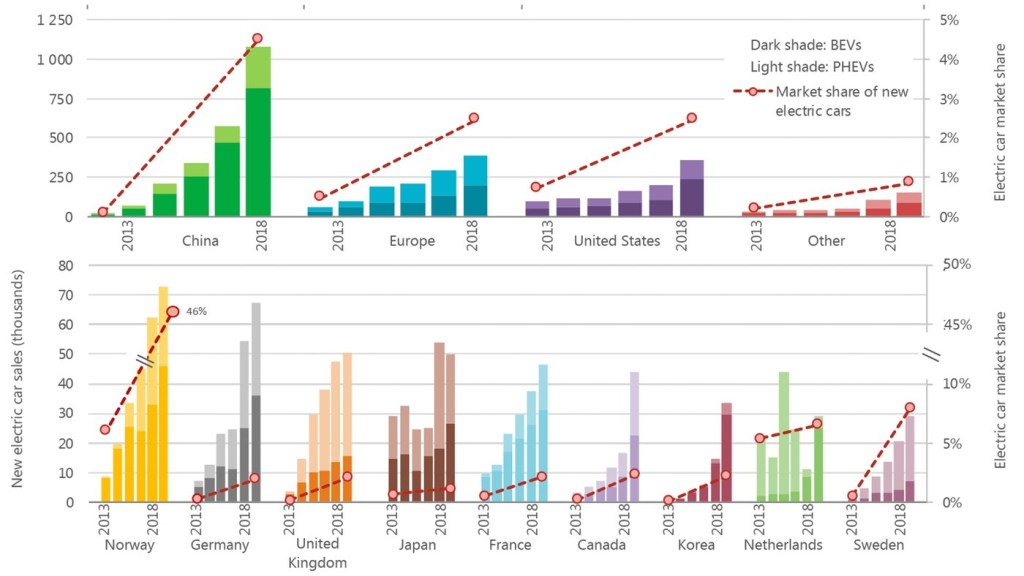
Electric cars will continue to be produced and do compete with your average gas-powered car (Tesla has already made a massive name for itself). According to the Global Vehicle Outlook (report found here: https://www.iea.org/reports/global-ev-outlook-2019), electric car numbers in the market are expected to reach 44 million by 2030! (view graph: https://www.iea.org/data-and-statistics/charts/electric-vehicle-stock-in-the-ev3030-scenario-2018-2030).
Moving forward
For Pininfarina to survive this shift, they have done their number one goal and designed a supercar (fully electric with zero emissions) that is set to release in 2020. Let me introduce to you, the Pininfarina Battista!
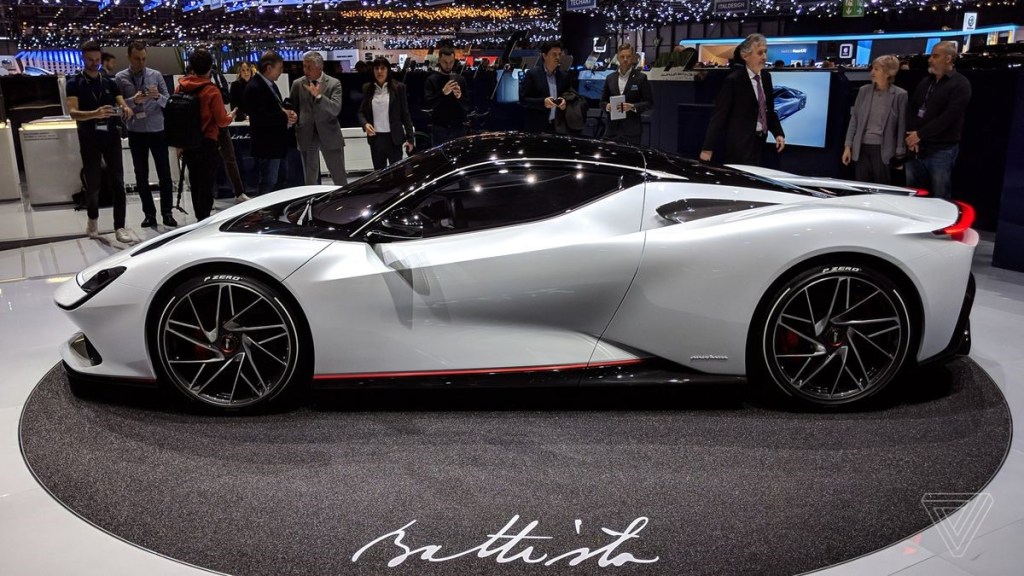
Lay your eyes on this beautiful beast (although it won’t have a v12 roar)! You are looking at a car that has 4 electric motors (one for each wheel) giving out a whopping 1990 horsepower. Going 0 – 100 in just shy of 2 seconds, this majestic beauty will come in 3 models or design packages I should say with only 150 of each design being produced. If you don’t know much about cars and you’re trying to guess the price tag, ill help you out! If you saved every penny you could, you would need 260 million pennies… that’s right, this car has a price tag of $2.6 million (and in my eyes, worth every. single. cent.)
Now looking back to 2015 where Pininfarina ended the year with an $18m loss, how have they turned around to such an advantageous spot to be able to produce such an amazing piece of automotive design? Well the answer stems from Mahindra.
With Mahindra wiping half of their debt upon acquisition of 76% of the company, it has allowed Pininfarina to increase its revenue and finish each year stronger than the last. Another boost to their cementation in increased business is when Mahindra announced they would be backing and investing money into the project of Pininfarina Battista (view article here: https://economictimes.indiatimes.com/industry/auto/auto-news/mahindra-mahindra-to-roll-out-electric-hypercar-designed-by-italian-firm-pininfarina/articleshow/63756842.cms?from=mdr)
Now nobody knows how much has been invested into the project but all I can say is kudos to Pininfarina for continuing their fight and cementing their path in the cut-throat world of automotive trade.
My experience with Studiosity
Well what can I say? I have read many drafts for others and seen that everyone got picked up on academic writing so I wasn’t surprised to see that in my feedback however I can see the value in Studiosity. If there’s one thing I’m learning throughout this unit is Martin has a method to this madness. Everything we do in this unit has an experience we can take into the real world and I now know I have another avenue for having my assignments checked prior to submitting it.
Using Studiosity was easy enough, just upload the document you want checked and give a brief description about the assignment. This allows the checker to understand what they are looking at which I think helps as if you want a specific section checked to ensure it meets the requirements set out in your assignment marking criteria, they know what they are marking against.
The response time was unbelievable! It gave an estimate that when I submitted at 10pm on a Wednesday night, I would receive it between 4am-10am the next day. To my surprise however, I received it around 11:30pm Wednesday night. Talk about service!
Some of the points that were made in feedback I have taken inboard and now have a better understanding of how my writing can be improved. I really see the value in Studiosity and can’t wait for future interactions with it.
Favourite Blogs:
EVAN REDWARD https://mindthenumbers.home.blog/
Evans blog is easy to follow, and the layout is simple yet effective. I like that up the top, there is a menu with labels for each step of assignment 1. This allows the reader to click on ‘Step 3’ and know that the only information they are reading relates to step 3. Due to the volume of information on Evan’s blog, breaking it up into manageable chunks and separating the information has allowed me to not feel overwhelmed when browsing his page. Great work!
AMY MCCLELLAND https://thedailyamy.home.blog/blog-feed/
Now although I haven’t actively participated with Amy’s blog to the best of my ability, I have read her posts when they pop up and seen the dedication that has been put into this unit. Juggling kids, work and uni is crazy yet (unlike me) there is always an update on the blog and its an interesting read. The content that is put out is widely accepted by everyone and there’s a perfect balance of work and fun mixed in. I enjoy popping in every now and then just to see the new updates and never know what the next post will be. There is so much useful information on Amy’s blog such as Grammarly (who knew a simple yet wonderful plug-in existed?) and the Step 3 checklist (you are a life saver for posting this!). Reading through these posts allowed me to ensure I have checked off all requirements for this assignment!
DANIELLA DAVENPORT https://daniellas.school.blog/
Again, I have been a silent observer for Danii’s blog however the layout of her blog is captivating. Captivating in the sense that when you open up Danii’s blog, the first thing you see is a picture of nature. Now nature is a beautiful thing and humans are complicated. When you have a visually appealing picture (such as the trees protecting the road with sunrays shining through), it sets the mindset of the reader instantly. Because of this, i believe there is a natural calming affect that takes place. Tying into the simplicity of the layout, the blog is easy to navigate and labelled clearly which allows me as the reader to know exactly what I’m looking at prior to opening the blog post.
 Tyson MacGregor's Blog